What Is Time and Attendance Software? The Complete Guide for HR & Operations Leaders
The problem with « how we've always done it»
Ask any HR manager how they currently track employee attendance, and you'll hear a familiar story: paper sign-in sheets, Excel files emailed every Friday, or proximity cards that anyone can swipe. These systems feel manageable — until they don't. A workforce of 50 people managed with spreadsheets becomes a payroll nightmare. A single employee clocking in for an absent colleague (a practice so common it has a name: "buddy punching") can cost a mid-sized business tens of thousands of dirhams per year without a single alarm being raised.
This is exactly the problem that time and attendance software was built to solve. And in 2025, the best solutions go far beyond simple clock-in/clock-out recording.
What is time and attendance software?
Time and attendance software is a digital system that automatically records, manages, and analyzes when employees start and finish work, their breaks, absences, overtime, and shift patterns. It replaces manual processes with accurate, real-time data that feeds directly into payroll, HR reporting, and compliance workflows.
Modern platforms like Optitime don't just record hours — they serve as the operational backbone connecting your HR team, your operations floor, and your physical access control infrastructure.
Core capabilities of a modern system
- Automated time capture via biometric pointeuses (fingerprint, facial recognition), RFID badges, or mobile apps
- Real-time dashboards showing who is present, late, or absent across multiple sites
- Payroll integration that eliminates manual data entry and calculation errors
- Leave and absence management with approval workflows built in
- Access control integration — linking who can enter which zone, and when
- Compliance reporting aligned with local labor regulations
How does it actually work? The technology behind it
Understanding the technology stack helps decision-makers choose the right solution for their infrastructure and workforce size.
The hardware layer: biometric pointeuses and access readers
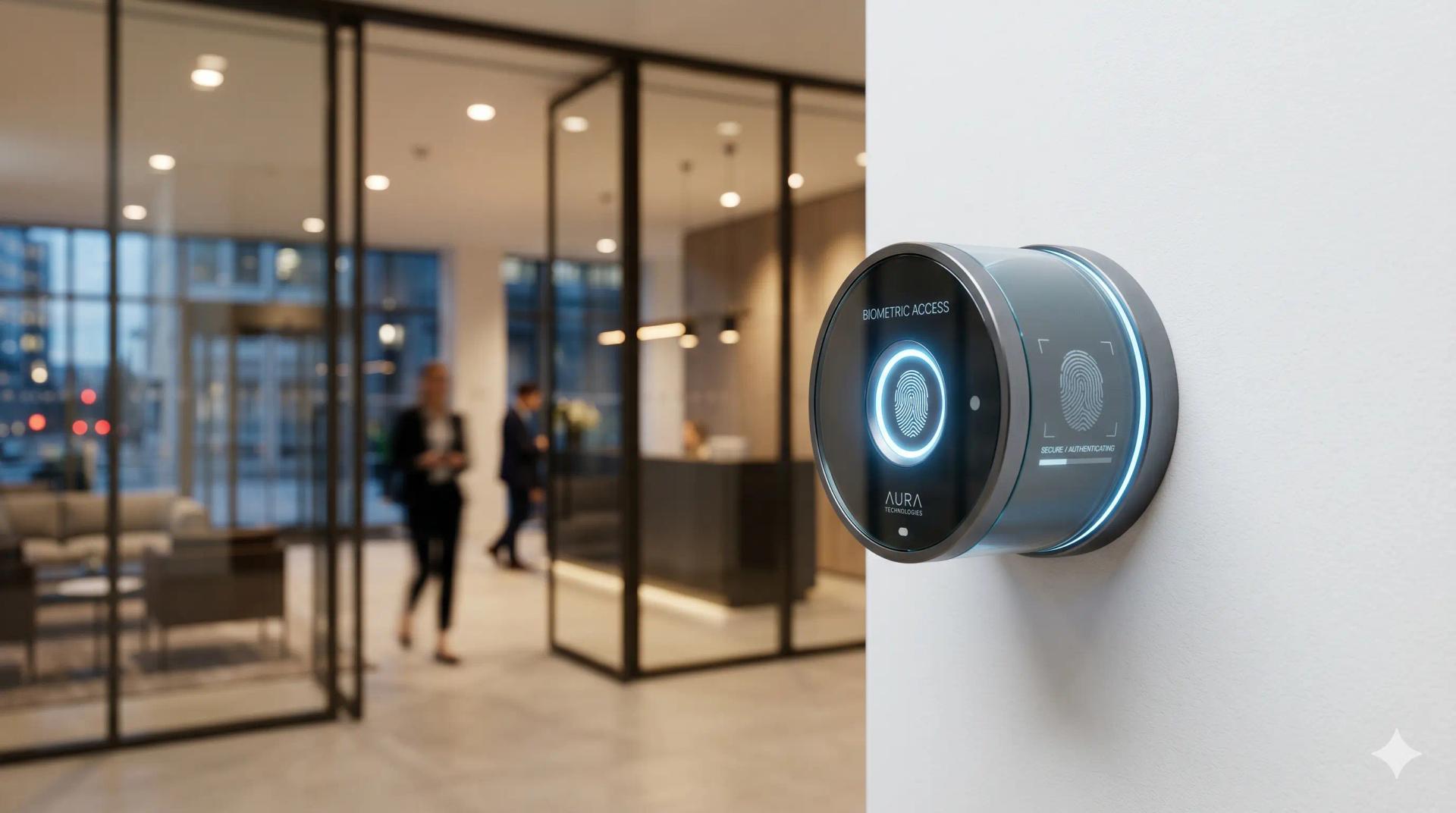
The physical time clock — the pointeuse — is the employee's first touchpoint. Modern biometric pointeuses use fingerprint scanning or facial recognition to verify identity at the moment of check-in. This is fundamentally different from a badge or PIN system: a fingerprint cannot be lent, lost, or forgotten. The pointeuse communicates with the central software in real time, pushing timestamp data the moment an employee authenticates.
For enterprises managing access control alongside attendance, these devices double as door access readers — a single piece of hardware controlling both who enters a zone and recording their work hours simultaneously.
The software layer: where data becomes decisions
The management software aggregates data from all devices across all sites. It applies your company's work rules — shift patterns, overtime thresholds, grace periods, public holiday calendars — and automatically computes worked hours, anomalies, and payable time. Managers receive alerts for anomalies. HR receives clean, verified data ready for payroll processing. Directors get trend reports across departments and sites.
Why biometric time tracking outperforms traditional methods
The gap between biometric time and attendance systems and legacy alternatives isn't just about technology — it's about the quality and reliability of the data your business decisions rest on.
Manual timesheets
- Prone to honest mistakes and intentional manipulation
- Require hours of HR time to collect, verify, and process each pay cycle
- Provide zero visibility until the end of the week or month
- Impossible to audit without physical documentation
RFID badge systems
- Badges can be shared between employees ("buddy punching")
- Cards are lost, damaged, or forgotten regularly
- No identity verification — the system records the badge, not the person
- Replacement and administration costs accumulate over time
Biometric systems (fingerprint & facial recognition)
- Identity is verified at every single check-in — no exceptions
- Buddy punching is structurally impossible
- Zero consumables — no cards, no PINs, no replacements
- Data is available in real time, not at the end of the pay period
The business case: what poor time tracking actually costs
Time theft — employees being paid for time they didn't work — is estimated to cost businesses between 1.5% and 5% of their total payroll annually. For a Moroccan enterprise with 200 employees earning an average of 6,000 MAD per month, that represents between 216,000 and 720,000 MAD lost every year to unrecorded late arrivals, early departures, extended breaks, and buddy punching.
That figure doesn't include the administrative cost of manual processing: an HR officer spending 8 hours per pay cycle on timesheet collection and verification is losing approximately 192 hours per year — nearly five full working weeks — to a process that modern time and attendance software eliminates entirely.
Who benefits from time and attendance software?
HR managers
Automated, error-free data means payroll runs faster and cleaner. Leave requests, absence tracking, and compliance reporting become manageable rather than overwhelming. HR teams reclaim hours previously lost to manual reconciliation.
Operations directors
Real-time visibility into workforce presence across sites allows proactive management. Understaffed shifts are flagged before they become operational failures. Cross-site reporting provides the strategic data needed for workforce planning.
IT and security managers
Integrating time tracking with physical access control means one unified system to manage. Audit trails for zone access, time-based door permissions, and employee movement logs are all centralized and searchable.
Business owners and CEOs
The ROI is measurable and relatively fast. Reduced payroll leakage, lower HR administrative overhead, fewer compliance risks, and a more accountable workforce culture deliver tangible returns within the first year of deployment.
What to look for when choosing a solution for your business
Not all time and attendance systems are created equal. Here are the criteria that matter most for B2B enterprises in Morocco and across the African market:
- Multi-site support — Can the system manage attendance across multiple offices, factories, or warehouses from a single dashboard?
- Hardware integration — Does the software work seamlessly with your existing or planned pointeuses and access control hardware?
- Payroll connectivity — Does it integrate with your payroll system, or export in formats your payroll team can use?
- Local labor law compliance — Is the system configurable for Moroccan labor code requirements, including overtime rules and public holiday management?
- Scalability — Can it grow with your organization from 50 to 5,000 employees without a platform change?
- Local support — Is there a team in Morocco that can deploy, train, and support your organization in Arabic, French, and English?
Optitime: built for enterprises that can't afford to guess
Optitime, Comsys's flagship time and attendance platform, was designed for exactly the operational environment described above. It combines enterprise-grade management software with native integration for biometric pointeuses and access control hardware — giving HR, operations, and security teams a single, unified view of their workforce.
From a manufacturing plant in Casablanca to a multi-site retail operation across Morocco, Optitime delivers real-time attendance data, automated payroll exports, and configurable access control rules — all managed from one intuitive platform, supported locally by the Comsys team.